Best Life Jackets and PFDs for Boating (2026)
The best life jackets are the ones you'll actually wear. Our top 2026 picks for inflatable, foam, and offshore PFDs across every price point.


Most people who drown in U.S. boating accidents weren't wearing a life jacket. The reason isn't usually that they didn't have one — it's that the one they had was uncomfortable, in a locker, and not worth the hassle.
The single best safety upgrade you can make is buying jackets you'll actually wear. Modern inflatables are slim, comfortable, and fade out of awareness while you're aboard — until you need them. This is our 2026 buying guide.
PFD types and what they actually mean
The U.S. Coast Guard rates PFDs by type:
- Type I (Offshore): highest buoyancy (22 lb minimum), turns unconscious wearer face-up. Bulky. Required on commercial vessels in offshore waters.
- Type II (Near-shore): 15.5 lb buoyancy, will turn most unconscious wearers face-up. Typical "horse collar" foam vest.
- Type III (Flotation Aid): 15.5 lb minimum, designed for conscious wearers in calm water. Most foam vests sold for recreational boating.
- Type IV (Throwable): ring buoy or seat cushion. Required to be aboard most boats but not worn.
- Type V (Special Use): task-specific. Most inflatable PFDs are Type V (rated as Type II or III when inflated).
For most yacht owners, the answer is Type III foam vests for water sports/calm water + Type V inflatables for everyday cruising wear.
What to look for
- Inflatables vs. foam: inflatable is much more comfortable for all-day wear. Foam never fails (no CO2 cartridge to maintain) but is bulky.
- Auto vs. manual inflate: auto inflates when submerged. Manual requires you to pull the cord. Auto is right for most situations — manual only makes sense if you'll be in/around water and don't want to be inflated by spray.
- Suspenders vs. belt pack: suspenders are heavier and more visible (so people remember to wear them); belt packs are unobtrusive but can twist and don't auto-inflate.
- Fit: most adult inflatables are "one size fits all" with chest sizes 30-52". For taller adults or anything outside that range, check sizing carefully.
1. Onyx A/M-24 (Best All-Around Inflatable)
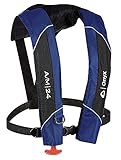
For: the inflatable PFD most boaters should buy. The A/M-24 is the convertible auto/manual model — flip a switch and it's auto-inflating, flip it back for manual-only. Slim profile (the inflatable bladder hides inside a low-profile shell), 22.5 lb buoyancy when inflated, USCG approved Type V (Type III performance). Around $150. The inflators need to be replaced after each deployment, but service kits are $25 — far cheaper than a hospital trip.
2. Mustang Survival MIT 100 Auto (Best Premium Auto-Inflate)
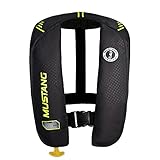
For: owners who want the absolute best build quality. Mustang Survival is to PFDs what Icom is to VHF — boring, reliable, last forever. The MIT 100 auto-activates within 10 seconds of immersion, 26 lb of buoyancy, USCG Type V/III approved. The "M.I.T." (Membrane Inflatable Technology) bladder is more durable than competitors'. About $200. Worth the upgrade if you cruise offshore or use the boat year-round.
3. Mustang Survival MIT 100 Manual (For Conditions Where Auto-Inflate Is a Risk)

For: kayakers, paddleboarders, dinghy sailors, fishing in heavy spray. Same build quality as the auto version, but only inflates when you pull the cord. The advantage: no false-deploy in heavy spray, when you're getting in/out of dinghies, or when intentionally getting wet (snorkeling from the boat, etc.). Same $200 range. Don't pick manual if you're a poor swimmer or boating with kids — auto is the right default.

4. Stearns Sospenders Inflatable (Best Budget Inflatable)
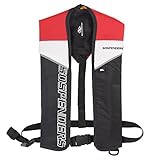
For: budget-conscious boaters who still want an inflatable. At around $80, half the price of an Onyx. Manual inflate only (which keeps the cost down). Coast Guard Type V (Type III when inflated). The build quality is one notch below Mustang/Onyx, but for occasional use it's a great way to get into inflatables without spending $150-200.
5. Stearns Comfort Series Angler Vest (Best Foam Vest)
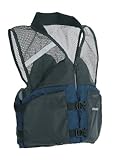
For: anyone who needs a Type III foam vest for water sports, fishing, or as a backup. Foam never fails. No CO2 cartridge to maintain, no service intervals, no risk of false deployment. Won't be your everyday cruising PFD (too bulky), but you should have at least a few foam vests aboard for guests, swim breaks, or as backups. The Comfort Series is around $40 and well-made for the price. Available in fishing-friendly colors with multiple pockets.
How many PFDs do you need?
USCG minimum: one wearable PFD per person aboard, plus at least one Type IV throwable on boats 16 feet and over.
Practical reality: carry a wearable PFD per person at every seating position, plus 1–2 spares for guests. For yachts that frequently entertain, that means 6–10 PFDs, mostly Type III foam vests.
For the captain and primary crew, dedicated inflatable suspenders worn 100% of the time at sea is the right pattern.
Maintenance you can't skip
Inflatable PFDs need annual checks:
- Inspect the cylinder. Weigh it (should match the spec on the label). If under-weight, the CO2 has slowly leaked. Replace.
- Inspect the bobbin / dissolving pellet in auto-inflate models. These have a 1–3 year lifespan and dissolve over time. Check the date on it.
- Manually inflate via the oral tube. Leave inflated overnight. If still firm in the morning, the bladder is intact. If soft, replace the PFD.
- Look at the fabric. UV degrades the outer shell over years. Faded, brittle fabric = replace.
Annual inspection takes 10 minutes per PFD. The day after you don't do it is the day the auto-inflate doesn't fire.
Things that aren't life jackets
Despite what you'll see on social media:
- Pool floaties, swim noodles, water wings are not Coast Guard approved and provide negligible flotation in chop.
- Dive vests / BCDs are not life jackets; they're buoyancy compensators with very different design intent.
- Kayak sit-on-top "PFD" foam. Some are Coast Guard approved, many aren't. Check the label.
Bottom line
For typical yacht owners in 2026:
- Daily wear inflatable: Onyx A/M-24 (best value) or Mustang MIT 100 Auto (best build)
- Budget inflatable backup: Stearns Sospenders Inflatable
- Type III foam for guests / swim breaks: Stearns Comfort Series Angler Vest
For more on safety gear pairing, see our marine VHF buying guide — VHF and PFD are the two pieces of gear that have saved more lives than any other on board.
Photos by Unsplash contributors. Product images via Amazon.
Liked this? Get the next one in your inbox.
Practical yacht-care notes and gear deep dives. Sent when there's something worth sending.


